


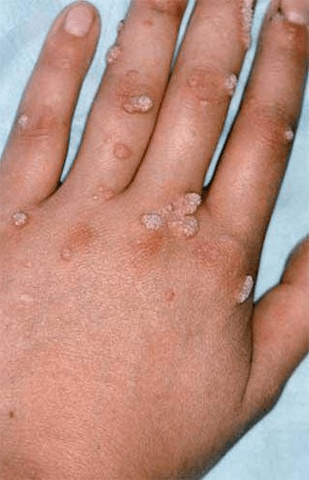
Human papillomavirus is the most common infection globally.
According to researchers, more than 90% of people in the world are infected with one type of HPV or another.Currently, there are more than 70 types of human papillomavirus.
Viruses affect the skin and mucous membranes: various types of warts, papillomas and warts are formed on them.Human papillomavirus lives in human blood and does not manifest itself until a certain time.But as soon as the immune system weakens, tumors appear on the skin and/or mucous membranes.This explains the rather long incubation period: from several weeks to decades.
What is it?
Human papillomavirus (HPV) causes changes in tissue growth patterns.It causes many skin diseases and mucous membrane damage.Modern medicine has identified more than a hundred types of viruses.
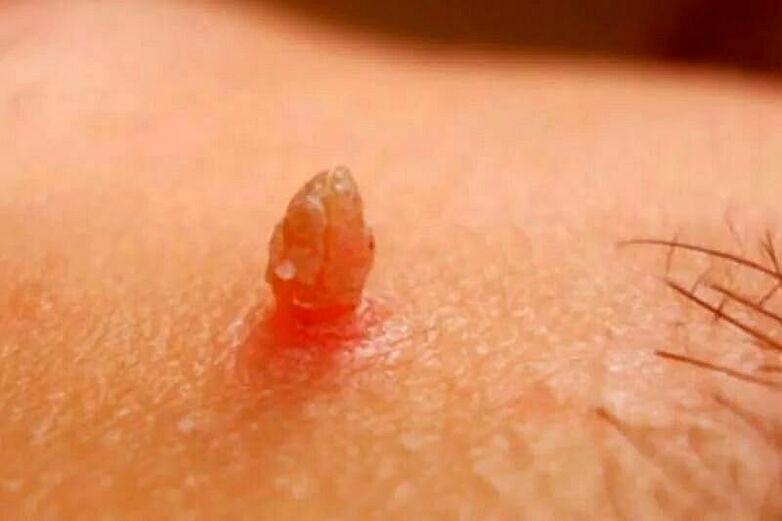
A papilloma is a tumor considered benign that grows on the surface of the skin and looks like a small nipple.The size of the papilloma can be from one to two centimeters.Place of appearance: oral cavity, nose, pharynx, vocal cords;can form on the bladder and other places.
Depending on the type of virus, the diseases are also different: warts are caused by human papillomavirus types 2 and 4, flat warts are caused by viruses types 3 and 10, genital warts are caused by viruses types 6 and 11.Some types of HPV (16, 18, 31, 33, 35) cause cervical dysplasia or favor the development of cervical cancer.Human papilloma virus is transmitted through contact and family, residing on the skin and mucous membranes.
Human papillomavirus is divided into two groups -high and low risk.The low-risk group includes HPV types (mainly types 6 and 11) that cause genital warts.High-risk groups include viruses 16, 18, 31, 33, 35 that cause cervical dysplasia and increase the risk of cervical cancer.
How can you get infected?
The source of infection is a sick person or virus carrier, meaning that the HPV virus is only transmitted from person to person.
There are three ways this infection is transmitted:
- contact and household (through contact);
- sexual (genital, anal, oral-genital);
- during childbirth from mother to child.
HPV affects the skin and mucous membranes: various types of warts, papillomas and warts form on them.
Risk factors
An interesting fact is that different types of HPV can manifest differently, causing a person to develop benign or malignant tumors.In addition, human papillomavirus is a virus that can affect the skin and mucous membranes or may not manifest itself until the carrier's immunity is reduced.
According to world statistics, the likelihood of getting this disease increases many times in the following groups of citizens:
- pregnant women;
- Patients often suffer from many different diseases;
- people with non-traditional orientation;
- male or female representative with a sexually transmitted disease;
- people who are overly sexually active;
- people with immune system disorders;
- sexual partners of people found to be carriers of HPV or have the disease in an active form;
- women with various cervical diseases.
All representatives of these types must undergo examination to detect papillomatosis.People who practice casual sex, have multiple partners, or change their names frequently should also get tested.Even an unprotected action can cause infection, so experts recommend observing measures to prevent this disease.
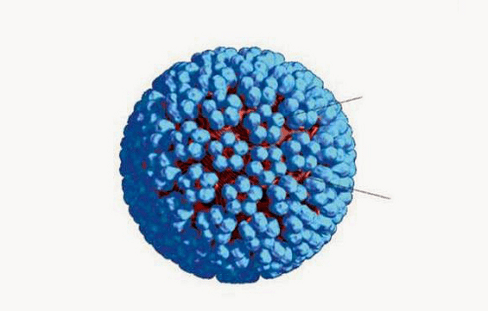
Human papillomavirus: incubation period
Normally, when infected with human papillomavirus, the incubation period is very long: from half a month to several years.Human papillomavirus infection is characterized by a hidden (latent) course.A person can be infected with more than one type of papillomavirus at the same time.Under the influence of many different factors, the virus is activated, its reproduction increases, and the disease enters the stage of clinical manifestations.
In most cases (up to 90%), spontaneous recovery occurs within 6-12 months, in other cases there is a long-term chronic relapse with the possibility of malignancy (depending on the type of virus).
Classification and symptoms of HPV
Clinical symptoms of human papillomavirus are quite different - for some types they are practically absent, and many types are manifested by the development of papillomas in different parts of the body.
There are several types of such skin growths - they serve as the basis for HPV classification.
Simple papilloma
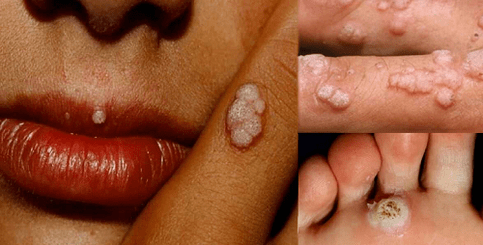
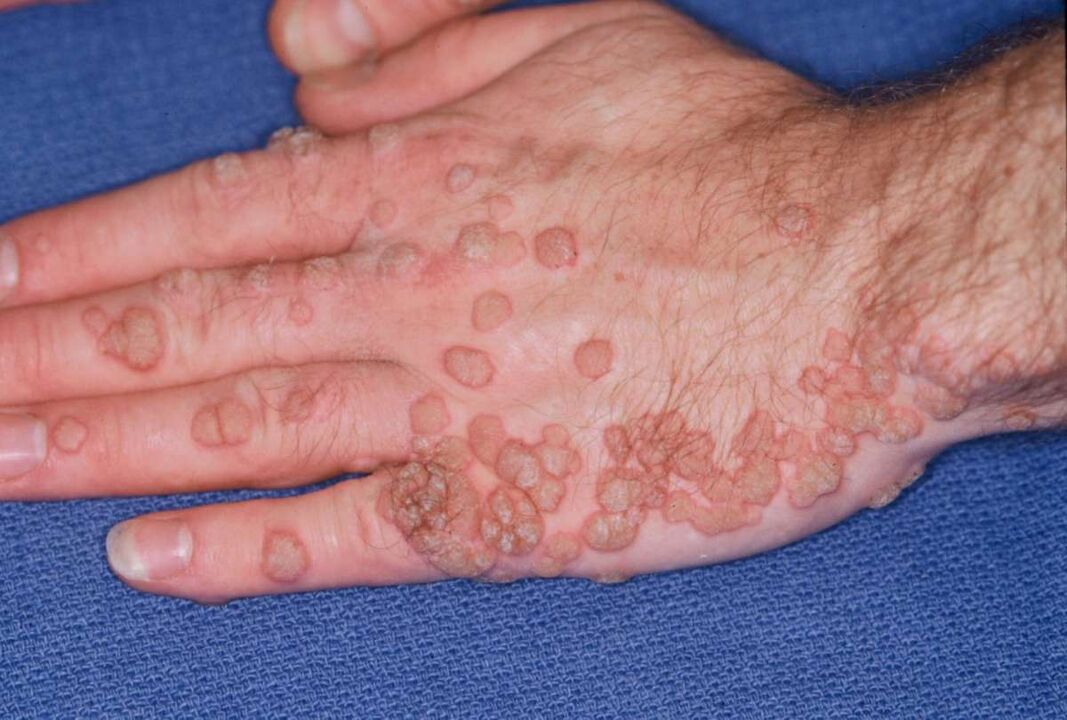
Their growth is stimulated by human papillomavirus type 2;The growths themselves are distinguished by their roughness, the presence of a keratinized layer and their size from 1 mm or more.Very often, such growth is not isolated but represents a local “annexed” area.Simple papillomas (also called vulgaris) can be located on the palms and between the fingers;In children they are detected on the knees.
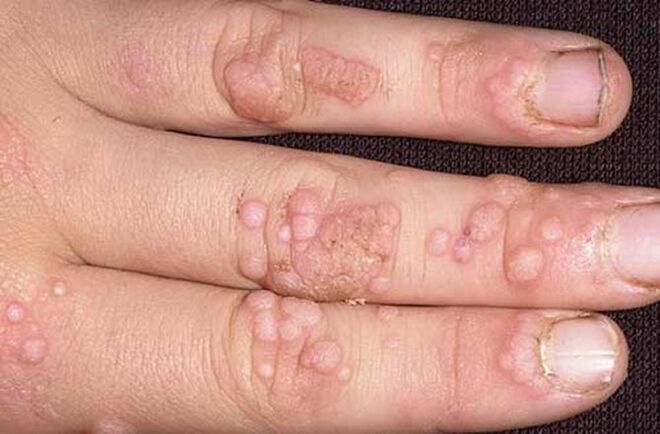
Flat papilloma
Caused by human papillomavirus types 3 and 10, they have identical colors on the skin and are therefore least noticeable.But in addition to the appearance of tumors, flat papillomas are also characterized by itching, hyperemia (redness) of the skin and pain.
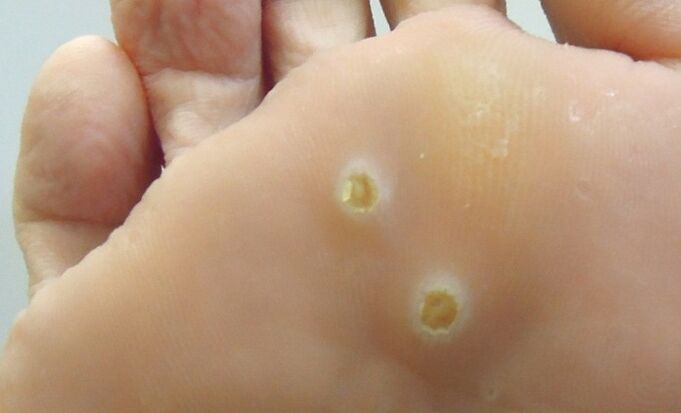
Papillomas on the soles of the feet
When they first develop, plantar papillomas look like a white, shiny spot.It then “rises” slightly above the surface of the skin.Multiple mosaic tumors may appear around the main papilloma.Such tumors complicate the patient's life – he has difficulty walking and it is almost impossible to find comfortable shoes.
fibrous papilloma
This type of cancer in question is characteristic of women over 50 years of age;they first appear as small yellowish bumps.Over time, these bumps grow and they turn into a cluster of many “threads”.
Condylomas acuminata
The appearance of the formations resembles cauliflower or honeycomb.Usually, warts are located on the foreskin, head of the penis, near the urethra, around the anus, on the labia minora, on the vaginal mucosa, cervix, corners of the mouth, and mouth of the urethra.
Bowen's disease
It looks like a single formation in the upper layer of the epidermis (usually on the head).A 5 to 50 mm lesion looks like a growing horny layer of skin, sometimes covered by a crust.Caused by HPV type 16 virus.Tumors easily degenerate into squamous cell carcinoma.
Formation in the pharynx
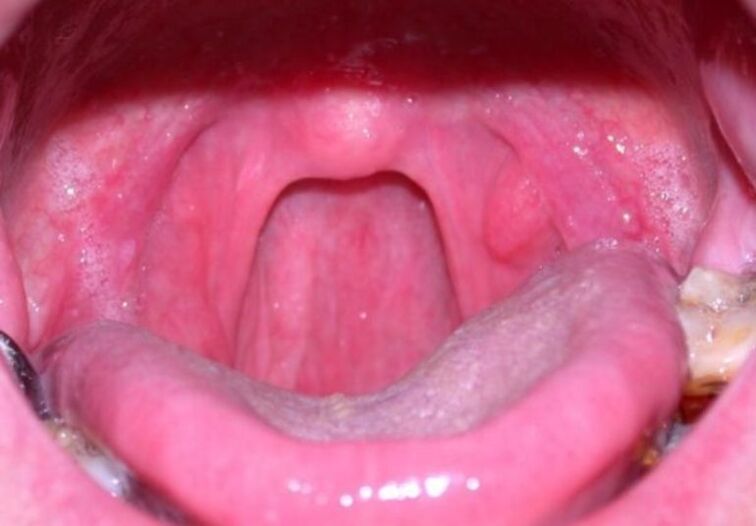
Papilloma blooms in the oral cavity also have a cauliflower-like appearance: white patches on the oral mucosa.Occurs in older people.Laryngeal papilloma can spread to the trachea, bronchi and lung tissue and occurs in children and adults.Signs of laryngeal papilloma are dysphonia (language disorder) and aphonia (inability to speak), hoarseness and difficulty breathing.When HPV infects the oropharynx, cancer can occur.
Papilloma virus in men
Papillomavirus infection in men can occur without any symptoms.It is worth noting that in the main risk group, men who frequently change partners have unsafe sex.
Pathological formations are localized in the following places:
- on the head and shaft of the penis;
- on the skin of the scrotum;
- in the perineal area;
- on mucous membranes.
This virus in men can be in a highly carcinogenic form.This leads to genital cancer.However, if you start treatment on time, the risk of cancer-causing diseases will be minimized.Warts caused by the HPV virus are removed surgically or using special chemical solutions.At the same time, antiviral drugs are prescribed.Therefore, in the early stages of development of this type of disease in men, the disease can be completely eliminated.
Human papilloma virus in women
As mentioned, women aged 20–45 are most susceptible to the virus.But what is worth noting here is that the main risk group is those who often change partners and have unsafe sex.
This type of infection in women is divided into the following groups:
- high carcinogenic potential;
- low carcinogenic potential;
- non-carcinogenic.
The most dangerous infection for women's health is the highly carcinogenic type.Almost always leads to cancer - melanoma, cervical cancer.The risk of developing such pathology is 90%.The situation is further aggravated by the fact that in the first stages of development, the disease does not show symptoms.Occasionally, small warts may appear on the palms of the hands and soles of the feet.
With a highly cancerous infection, warts are formed.These are similar in shape to warts, but have jagged edges.Such formations can appear in the vagina, anus and perineum.Sometimes warts can be in the form of fluid-filled bubbles, which over time burst and emit an unpleasant odor.
High-type HPV infection can also cause vaginal and vulvar cancer.In rarer clinical cases, nasopharyngeal cancer may occur.It is worth noting that it is almost impossible to completely cure the highly cancerous form of HPV.
The dangers of human papillomavirus infection
The characteristic of the papillomatosis virus is that it settles on the skin or in the mucous membranes of various organs: reproductive (both male and female), esophagus, bronchi, oral cavity, rectum.It can also be localized to the conjunctiva of the eye.
Each virus strain has its own "favorite" way of locating.Thus, the most dangerous viruses 16 and 18, when ingested, will immediately "target" the genitals, while the less carcinogenic viruses 6 and 11 will infect the vulva and perineum, causing the development of genital warts there.These same strains can cause papillomatosis in the baby's respiratory tract if the baby is born naturally to a mother with genital warts.
After infection, the disease does not always develop obvious symptoms.On the contrary, the disease often occurs unnoticed and does not lead to serious consequences.
The most dangerous complications of human papillomavirus infection are:
- Cervical cancer.It occurs in women due to infection with human papillomavirus type 16 or 18. It has been shown that this disease does not occur in the absence of human papillomavirus.And if earlier they talked about the development of cervical cancer due to erosion or ectropion, now this has been revised and denied;
- Rectal cancer.It, unlike the first disease, can have other causes;
- Nasopharyngeal cancer.It is also caused by type 16 virus;
- Lung cancer, which can occur when infected with types 16, 18, 11, 2, 6, 30;
- Respiratory failure, which develops with the growth of malignant papillomas in the respiratory tract (larynx, trachea);
- Bleeding due to contact with warts.If they are in the external genitalia, perineum or in the vagina, they are stimulated by sex.In other locations (in the nose, mouth), bleeding can be provoked when they are mechanically injured with other objects.
According to official sources, every year just under half a million (470 thousand) new cases of cervical cancer caused by this virus are recorded worldwide.233 thousand women die from this disease every year.This places this cancer in 2nd place in terms of frequency among all gynecological oncological diseases (1st place in breast cancer) and in 5th place among all causes of death in women.Usually, women under 40 years old die from cervical cancer.
HPV and pregnancy
Human papillomavirus does not affect reproductive function, meaning the virus does not prevent women from having children.
If human papillomavirus infection is detected during pregnancy:
- The first thing is to find a good gynecologist and have him monitor you until you give birth.
- the most important thing is what signs of infection a woman has, the doctor's tactics will depend on this,
- Viruses have no effect on the fetus!
- Warts and papillomas can be removed after childbirth,
- minimal medication (only when needed) during pregnancy,
- during childbirth, the child can become infected as it passes through the birth canal,
- If there are obvious changes in a pregnant woman's cervix, they may recommend a cesarean section,
- in the absence of manifestations - natural birth.
In general, cesarean sections due to HPV infection are rarely performed.And subsequent manifestations of infection in children are also extremely rare or insignificant.
Diagnose
In recent years, medicine has made significant advances in diagnosing PVI.This became possible thanks to the systematization of data on HPV and diseases related to it, the study of all existing routes of infection, the many pathogenesis mechanisms of the infection process and the state of the immune system, as well as possible morphological changes.
There are several ways to diagnose human papilloma virus infection, and in this case, experts adhere to generally accepted algorithms:
- Both sexually active women and men should be tested for HPV.
- Patients with HIV and those with symptoms of sexually transmitted diseases should also be screened.
- People with proven risk factors for PVI.
- The patient has sharp papillomas in the oral cavity and genital area.
- Patients with various pathologies of the cervix.
- Couples who are planning a pregnancy.
Basic diagnostic methods of PVI:
- Visually inspect the lesions.
- Use a magnifying glass and colposcope.
- Cytological research methods.
- Molecular biological engineering.
- Histological examination (pathology).
All patients tested for the presence of PVI had concurrent testing for syphilis, hepatitis, and HIV, smear testing for bacteriological screening of urethral, vaginal, and cervical secretions, and PCR and bacteriological testing ordered for the presence of urogenital infection.
As a rule, detecting papillomavirus does not cause difficulties: the infection is detected during a standard examination by a gynecologist or dermatologist.If appropriate symptoms occur, a targeted biopsy will be performed.In case a patient is diagnosed with flat uterine fibroids localized in the genital area, to prevent the development of malignancies, testing for human papillomavirus serotypes with markers of carcinogenicity will be performed.
How to treat human papillomavirus?
Currently, definitive treatments for papillomavirus infection in men or women have not yet been developed.All existing plans aim to neutralize pathogens and enhance antiviral immunity;warts, warts and dysplasia are removed using minimally invasive methods.Cervical excision, condensation, and excision are rarely performed and mainly in cases where there is a reasonable suspicion of cancer.
Destruction methods: surgical excision, curettage, electrocautery, cryodestruction, laser surgery.
- Surgical treatment is performed if malignancy is suspected.It is not used often because when removing warts, severe bleeding may occur.During this operation, the removed wart will be sent for a biopsy and the wound will be sutured.
- Curettage is the removal of warts using curettage, that is, by curettage.After that, coagulation is performed and a dry bandage is placed on the wound.
- Electrosurgery is used to remove small warts.But even in this case, relapse can still occur.This method can also be applied to large warts, but before starting they must be soaked or an electrode inserted into the thickness of the wart, so the separation between the cells becomes less strong.
- Cryodestruction is performed using liquid nitrogen.
- Laser surgery is currently occupying a leading position in surgical treatment, meaning that in addition to the destruction effect, hemostasis is carried out in parallel.In addition to the laser vaporizing warts, it also has a direct toxic effect on HPV, so this treatment is the preferred treatment of choice for cervical intraepithelial neoplasia and is also dominant in the treatment of genital warts in pregnant women (even in the final stages of development).
Cytostatics and chemicals with a burning effect are also used.
Immunotherapy - this treatment is used only in combination with other methods, since it does not have any specific effects, but only activates components of the immune system.
Combination treatments include a combination of the above methods.
TOP 10 myths about human papillomavirus
There are too many myths about HPV.We want to talk about the most popular of them.So what do people say about papillomavirus:
- There is no reliable data on whether HPV vaccination helps, so you don't need to get vaccinated.Answer: Yes, there are actually more than 100 types of papillomavirus, and there's really no data to suggest that the vaccine will protect against all of them.However, vaccination will protect you against the most aggressive strains of the virus for five years.The vast majority of recipients do not experience any side effects from the vaccine, so in our opinion, it is better to still get the vaccine.
- If you have genital warts, this will lead to cervical cancer.Answer: I wonder how many sleepless nights this myth has caused.In reality, things are not quite so gloomy.Both warts and cervical cancer are caused by human papillomavirus.But with completely different strains.Therefore, genital problems may have nothing to do with cancer.
- A smear test is more effective than an HPV vaccine.Answer: A smear test is a screening test to see if you have mutated precancerous cells on your cervix.And correct vaccination aims to ensure that antibodies are formed in the body, protecting cells from mutating when viruses invade.Therefore, it is better not to save on vaccination than to wait until the cells begin to become malignant.
- Older women do not need to be tested for HPV.Answer: One in four cases of cervical cancer and 41% of all deaths from cervical cancer occur in women 65 years of age and older.Regular screening is extremely important because HPV can reappear after many years of being dormant.Analysis should be performed every three years for women 21 to 29 years old and every 3-5 years for women 30 to 65 years old.
- If there are no warts, but the test shows that there is a virus, then I have cervical cancer. "Answer: do not rush to conclusions. Viruses can exist in the human body for a long time, but this does not mean a pre-cancerous condition. The appearance of these viruses in tests indicates that its quantity has increased, and this happens due to a decrease in the body's general immunity. Therefore, the main thing that you should pay attention to based on the results of this analysis is the condition.immune state, and it is better to proceed with treatment aimed at maintaining it.
- All papillomaviruses cause cancer.Answer: Many types of HPV do not cause problems.HPV infections usually clear up without any intervention within a few months of infection, and about 90% clear up within 2 years.And only a small percentage of infections with certain types of HPV can survive and develop into cancer.
- If you always use condoms, you will not get papillomavirus.Answer: Condoms definitely reduce the chance of contracting HPV and other sexually transmitted diseases.However, protected sex is not a 100% guarantee because papillomavirus is transmitted through any contact with mucous membranes.HPV can also be transmitted through touching and sharing toilets and hygiene items.If the papilloma is located on the mucous membrane of the lips, then the papilloma virus can be transmitted through kissing.All of the above does not eliminate the need to use condoms.
- HPV can be completely cured.Answer: It is not the virus itself that can be treated but the disease it causes.You can get rid of genital warts, you can get rid of warts, you can even cure cervical precancerous conditions.But unfortunately, the virus itself still exists in the human body.
- Once you are infected with the virus, it will come back again and again.Truth: Not necessary at all.Yes, your doctor will most likely see the presence of the bacterial strain on the stain.But if you lead a healthy lifestyle, eat properly and therefore have good immunity, the virus will not manifest itself.Nothing!
- In a relationship, a diagnosis of HPV means one partner has cheated on the other.Answer: It is this myth that has led many people to tragically erroneous conclusions and caused many couples to break up because it did not take into account one of the most mysterious aspects of genital HPV - the virus's latent ability to exist.Even if you and your man have been together since school, a HPV diagnosis only means that one of you has had human papillomavirus at some point in your life.
prevent
HPV prevention is based on the following three methods:
- Primary, which helps identify risk factors, prevent the spread of infection, as well as develop special vaccines;
- Secondary, based on patient examination, helps identify the disease in its early stages;
- Tertiary, based on preventing the development of relapses in people treated for this infection.
At the state level, several precautions are also being taken to prevent the spread of HPV.This is a desire to improve people's well-being, limit videos and advertisements based on implicit propaganda about promiscuity, and introduce programs to support young families.
At the medical level, preventive measures are based on the implementation of hygiene and education to familiarize the population with the transmission routes of various sexually transmitted diseases, their symptoms, treatment methods and, most importantly, barrier contraceptive methods against their infection.
Personal precautions include:
- refuse to have promiscuous sex;
- mandatory use of condoms during sex, although it has been established that HPV can also be transmitted through close skin contact;
- periodically visit the doctor for check-ups;
- maintain a healthy lifestyle and active sports;
- Timely treatment of identified diseases of the reproductive system.
Currently, two types of vaccines have been invented and put into medical practice.These drugs are completely harmless to humans because the viruses contained in them are no longer alive.Should be prescribed for both women and men aged 9-17 years;they are also approved for preventive use in women under 26 years of age.